
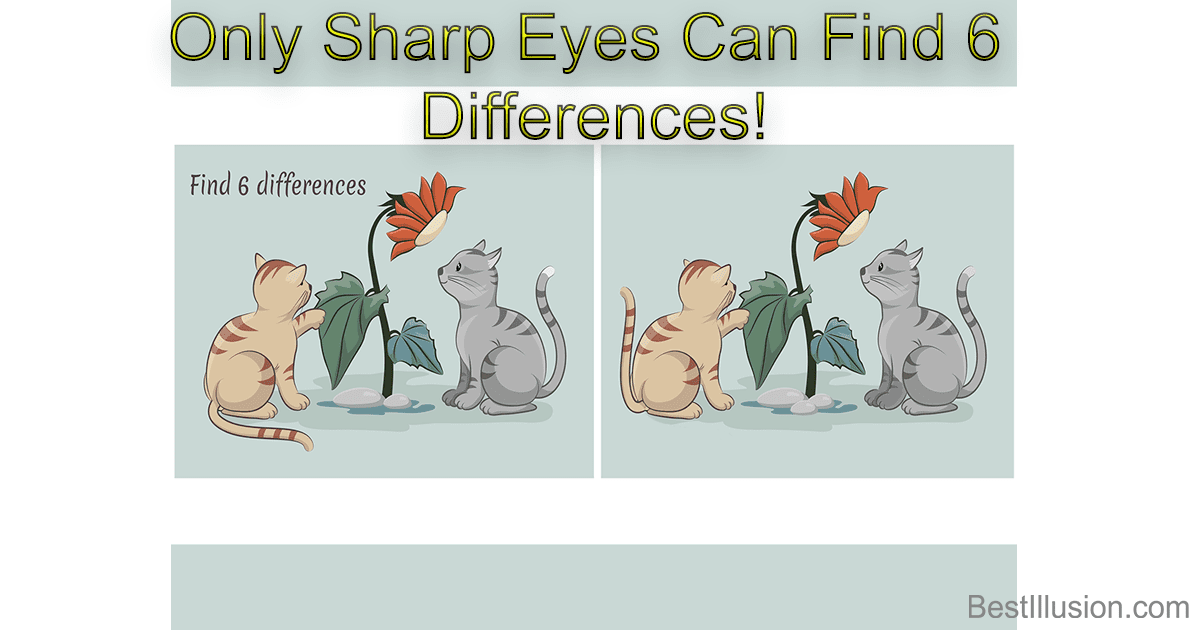
If you enjoy visual brain challenges, this Hidden 6 Differences Optical Illusion is the perfect test for you. Many sharp-eyed individuals can identify the differences quickly, while others need more time. Let’s find out how sharp your eyes really are.
What Is an Optical Illusion?
An optical illusion appears when your eyes and brain see something differently from reality. Because of this, your mind may interpret shapes, colors, or patterns in a way that is not accurate. These illusions can show:
- Movement
- Distorted size
- Extra or missing objects
- Misplaced shapes
As a result, they become fun and fascinating to explore. They also help us understand how our brain processes visual information. Even so, optical illusions can be misleading and may not represent the real world perfectly.
Hidden 6 Differences Optical Illusion Puzzle
Many people enjoy difference-finding puzzles because they boost focus and attention. If you practice these challenges often, spotting six differences may feel easy. However, some differences can be very small, which makes the puzzle more exciting.
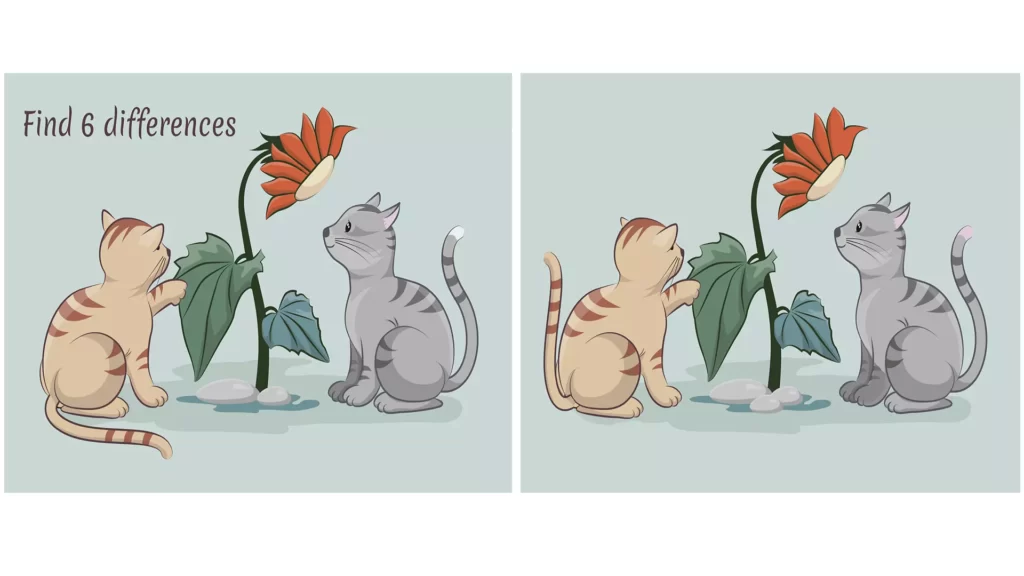
In today’s challenge, you will see two images that look almost the same. Your task is simple:
Find all six hidden differences by comparing the pictures carefully.
Your Challenge Starts Now
Take a close look at both images.
Your time starts now…
tick… tick… tick…
And… time’s up!
Did you manage to find all the differences?
If yes, you have sharp observation skills!
If not, don’t worry. Some details are tiny and easy to miss. You can always try again.
Answer
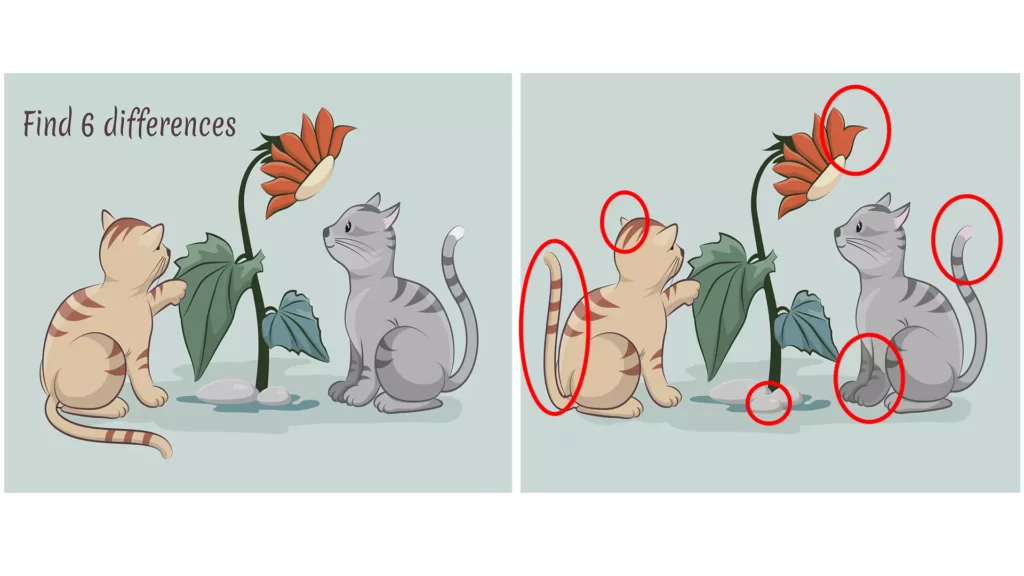
Solution: All 6 Differences Revealed
Below, you’ll see the solution image with all six differences marked clearly. After checking it, you may notice how subtle each change was. These small variations are what make spot-the-difference puzzles so enjoyable.
If you want more fun challenges, explore our other find-the-difference puzzles and continue training your brain.
Yes. They improve concentration, attention to detail, and short-term memory.
Most people take between 10 and 30 seconds. However, this depends on how difficult the image is.
While they do not increase IQ, they strengthen perception and problem-solving skills.
Because the brain fills in missing details automatically, very small changes become harder to notice.